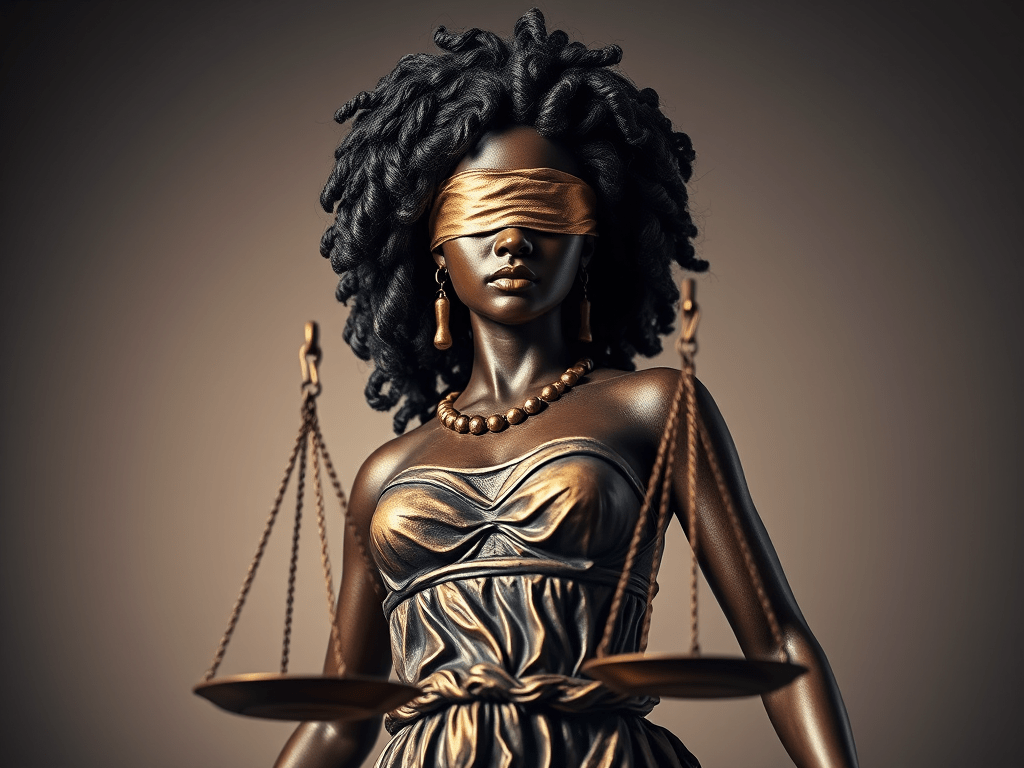
“Judges don’t have the power to pronounce anyone innocent. They only have the power to pronounce a person not guilty.” “Why?” Asked the Professor. “Well, because they never have the true knowledge of what transpired in a case.”
I became transfixed when my colleague uttered those words during my last graduate class on legal research and methodology. The truth was, I never saw or even thought about the judges’ role in that way. For me, the judge was the alpha and omega. The person who amongst other things possessed the power of giving and taking. Of life and of death. However, hearing those words forced me to think. And to ask questions that I had never considered since I became a lawyer in 2017.
The big question was, do we stand for justice, or do we stand for the truth? Before I could start nurturing this inquiry in my mind, I realized that this question begets another big question – what is justice and what is the truth?
What is justice? Is it a word with an innate meaning? Does it have a hidden connotation that is recognized at a glance? Is it just a void word, an empty carcass with no true connotation? Or is it a manipulative tool that anyone can use to steer and champion their cause? While I do not have the answers to these questions, I know that justice is a relative term. Its connotation varies, depending on who is involved. For this reason, I stop and ask again. From whose perspective should justice be adjudged? In a criminal proceeding, should it be from the lens of the prosecutors who aim to ground a conviction of guilt at all cost? If yes, will justice be said to have been done to convicts whose defense lawyers function to set them free while proving their innocence? Do we view justice from the lens of the oblivious judge who, without true facts of the case, tries to wriggle out a decision based on the arguments of both sides? Or would justice be said to have been done when a judge dismisses an action on procedural ground believing procedural justice of the case has been met? Or do we see it from the lens of the public, who wait while sitting on the edge and expect that “justice” must be seen to have been done?
As I thought about the foregoing questions, I realized that knowing the truth is pertinent for a sound judgment. But what is the truth? Should it be a legal truth? Or the real truth? Like justice, I perceive the truth as a relative term with different connotation. For prosecutors, the truth is predicated upon their reality that the accused must have committed the crimes and should be held liable. To the accused, it is believing that they did not commit the offence and must be declared innocent. To judges, it is listening to both sides and making a deductive conclusion on what side they choose to believe. And for the public, the truth depends on whose side they are on.
For these reasons, I ask again. Do we stand for justice, or do we stand for the truth? While the answer is not entirely clear to me, I know for certain that my justice and my truth depend on my core values and who I am. And for this I ask, what are your core values and who are you?


Leave a reply to Rukkie Cancel reply